 Author
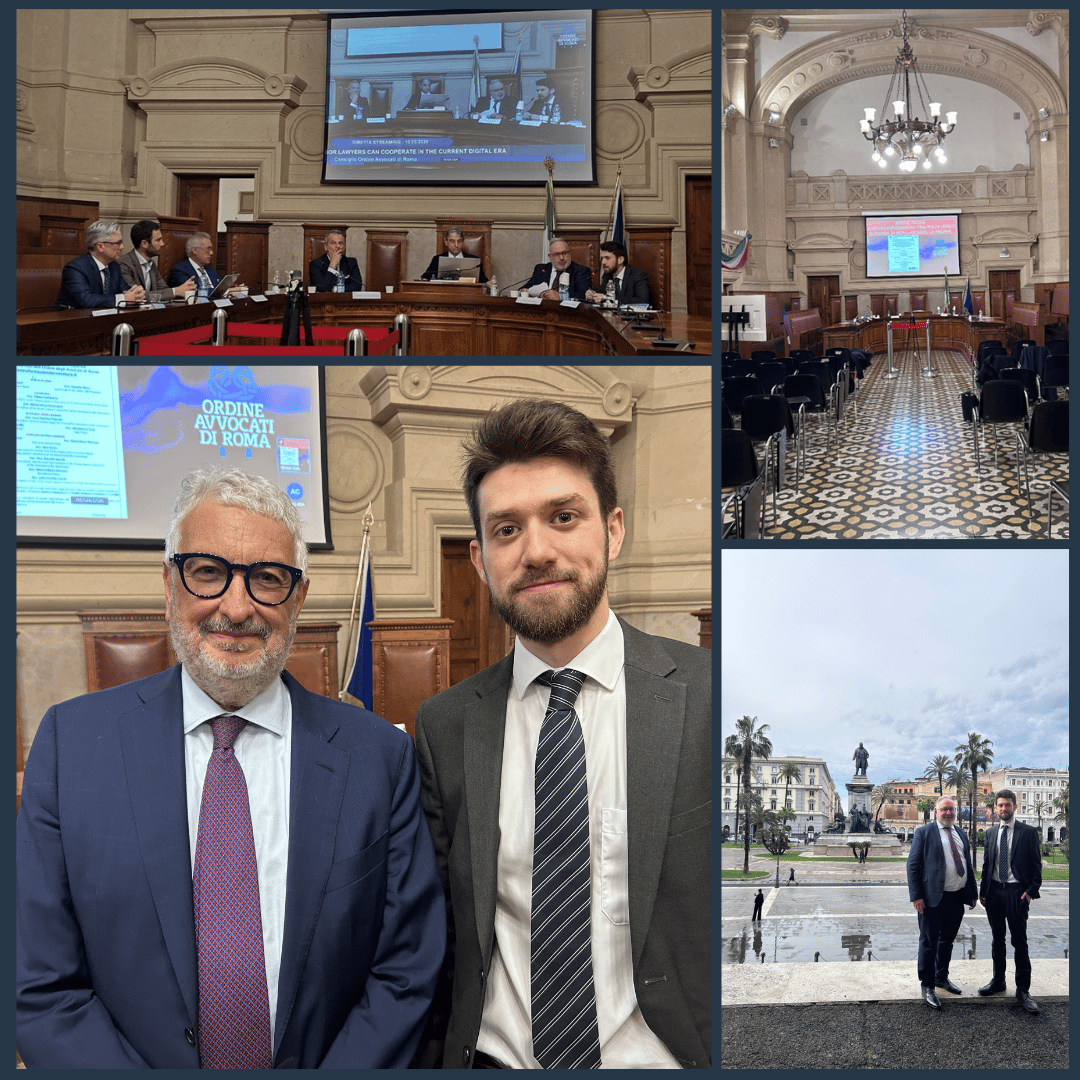
Playing football with my sons throughout their childhood, teenage years and even into adulthood has always been special. I never imagined there could be a much better feeling. As it turns out, I was wrong.
I recently had the privilege of sharing a platform with my son, Max Marmor, in Rome, where we both spoke at the Supreme Court of Cassation at a symposium on AI in today’s legal world, organised by the Rome Bar Council, Consiglio dell’Ordine degli Avvocati di Roma and the International Bar Association’s Senior and Young Lawyers’ Committees, also supported by the Law Firm Management Committee, of which I am the immediate past chair.
Max and I were each invited to share our perspectives on what AI means for the legal profession: mine as an experienced litigation lawyer, and Max’s as a corporate lawyer at the beginning of his professional career.
We also reflected on how we have supported and learned from each other throughout our journey of discovering and applying AI in practice. Max brings an inherent confidence and aptitude for technology, while I have the legal savviness borne from years in the field but have had to play a little catch-up on the technological side – a position that I suspect many professionals will recognise.

The Role of AI in Modern Legal Practice
We were able to share our insights with the great and the good from the Italian legal profession that:-
- senior and junior lawyers need to work closely together in today’s tech-driven climate, in what is a symbiotic relationship like never before: junior lawyers often bring confidence with new AI tools, while senior lawyers bring the judgment and experience needed to test and apply what those tools produce
- to attract and retain top talent, law firms should engage with AI tools or risk falling behind, meaning investment in training, approved tools and clear policies so that lawyers can use AI confidently and safely
- AI in the legal world can really assist with disclosure/discovery and handling multi-jurisdictional fraud cases. AI loves data, and can sift large volumes of documents, spot patterns and help lawyers prioritise what matters, but the legal analysis and final calls must remain with the lawyer
- AI can also be a great tool for corporate transactions but the judgment of a well-trained lawyer remains paramount
- If you order a latte in Rome, then expect a cup of warm milk! Who knew that AI could be so helpful?
We then heard from other panellists, which included:
- Daniele Bartoli of Gatti Pavesi Bianchi Ludovici (Milan, Italy)
- Joao Valadas Coriel of Valadas Coriel & Associados (Lisbon, Portugal)
- Massimiliano Danusso of Bonelli Erede (London, UK)
- Stephen Wilson of Wilson Wells (Turks & Caicos)
The symposium was chaired by Gianmatteo Nunziante of Nunziante Magrone (Rome, Italy) and Chaira Caliandro of De Berti Jacchia (Milan, Italy). Claudio Visco, the IBA President (pictured with Max Marmor), and Alessandro Graziani, the President of the Rome Bar Council opened the symposium.
It was a great event to participate in, and it sits well with Sherrards’ Italian Desk, headed-up by Francesca Rossi, of which Max is a member, being an Italian speaker having spent a year at La Sapienza University in Rome.

Promoting the UK as a Leading Jurisdiction for International Dispute Resolution
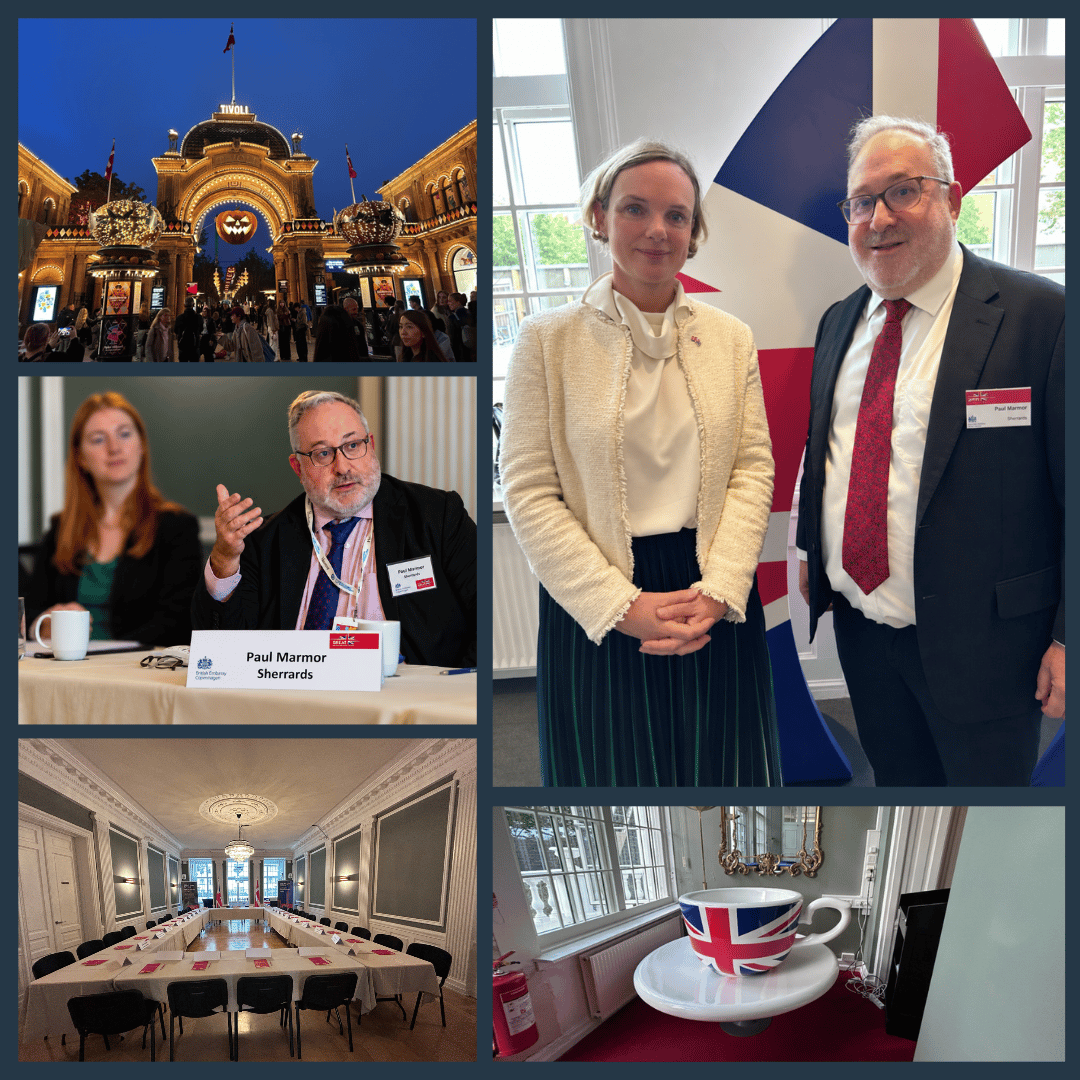
In other engagements, I was part of a delegation organised by the UK Ministry of Justice, held at the British Embassy in Copenhagen, alongside the IBA’s annual worldwide conference.
British Ambassador, Victoria Billing, explained that Denmark is a world leader and pioneer in modern wind technology, behind much of Britain’s transition into clean power, where Britain and Denmark are working together on so many levels with great friendship.
Managing Complex Multi-Jurisdictional Cases
I participated in and spoke at a round table on managing complex multi-jurisdictional cases. The MoJ is promoting the UK as a legal jurisdiction of choice, and there is much to shout about. We know from our experience in handling such cases that the UK is a centre of excellence for dispute resolution, for a number of key reasons including:
- an independent and incorruptible judiciary
- a very strong legal profession
- very strong academic institutions
- the common law system
- a stable political environment
- certainty in terms of legal costs
- the global enforceability of Judgments
- procedural flexibility
- worldwide injunctions
- a highly-developed alternative dispute resolution infrastructure, including arbitration and mediation
International Recognition for Sherrards’ China Desk
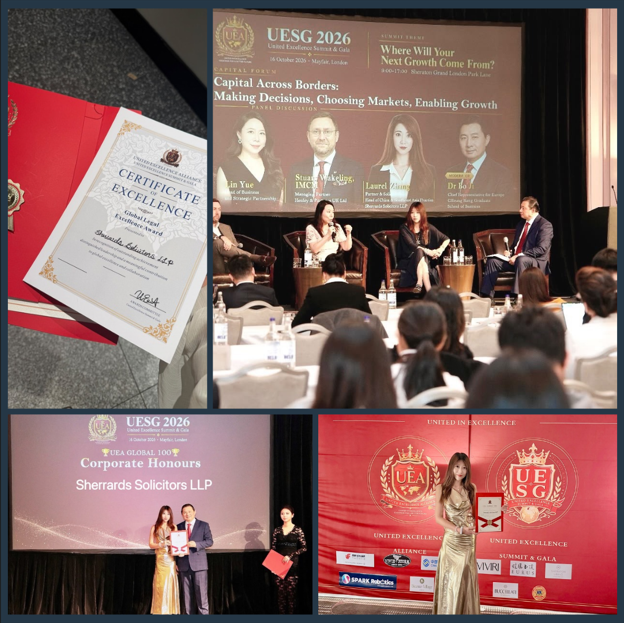
In further international news, Laurel Zhang, Head of Sherrards’ China Desk, was recognised with a Global Legal Excellence Award at the United Excellence Summit & Gala 2026. Laurel also participated in a panel discussion exploring international investment, business growth and cross-border opportunities.
Her recognition reflects the important role of international legal expertise in supporting businesses and individuals operating across different jurisdictions.
Together, these recent engagements in Rome and Copenhagen, alongside Laurel’s achievement, highlight the value of international collaboration, specialist legal knowledge and the exchange of ideas across the global legal profession.
As technology continues to reshape legal practice and international business becomes increasingly interconnected, these relationships and conversations will remain central to how we advise and support our clients.
Author News
 News
 News